The roof
Most of what we do for a proposal happens before either of you is on the roof. That is the thing worth understanding first, because it is the difference between a proposal that is photographed and a proposal that is staged again afterwards for the camera. By the time you walk out, the setup is standing, the candles are lit, the music is cued and the photographer is already in position.
A private hotel rooftop in Giza looking across at the Great Pyramids. It is confirmed with the venue for your date and your hour before anything is agreed, which is the step that has to happen first: the roof is somebody else's building and their answer is the one that decides your evening.
The pyramids are the view from it. They are not a backdrop we have placed you in front of, and the difference shows in a wide frame, where the plateau sits at its real distance with the roofs of the town between.
We do not name the hotel on this site yet. The name was given to us and we are waiting to confirm that they are content to be named publicly before we publish it, which is a slower answer than most people want and the right one.
What three of them actually looked like
We have photographed proposals on this roof with three different setups, and putting them side by side is more useful than any list.
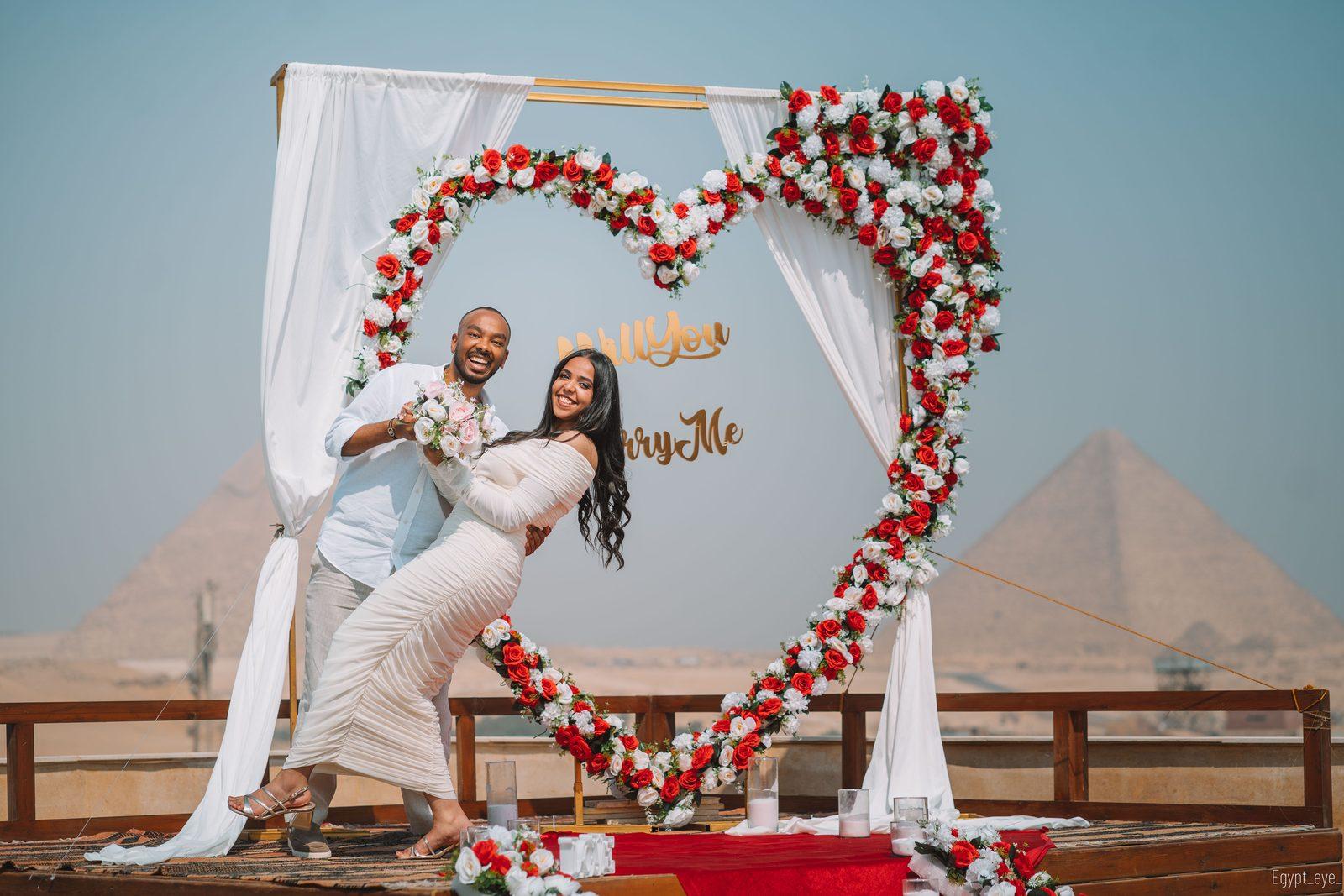
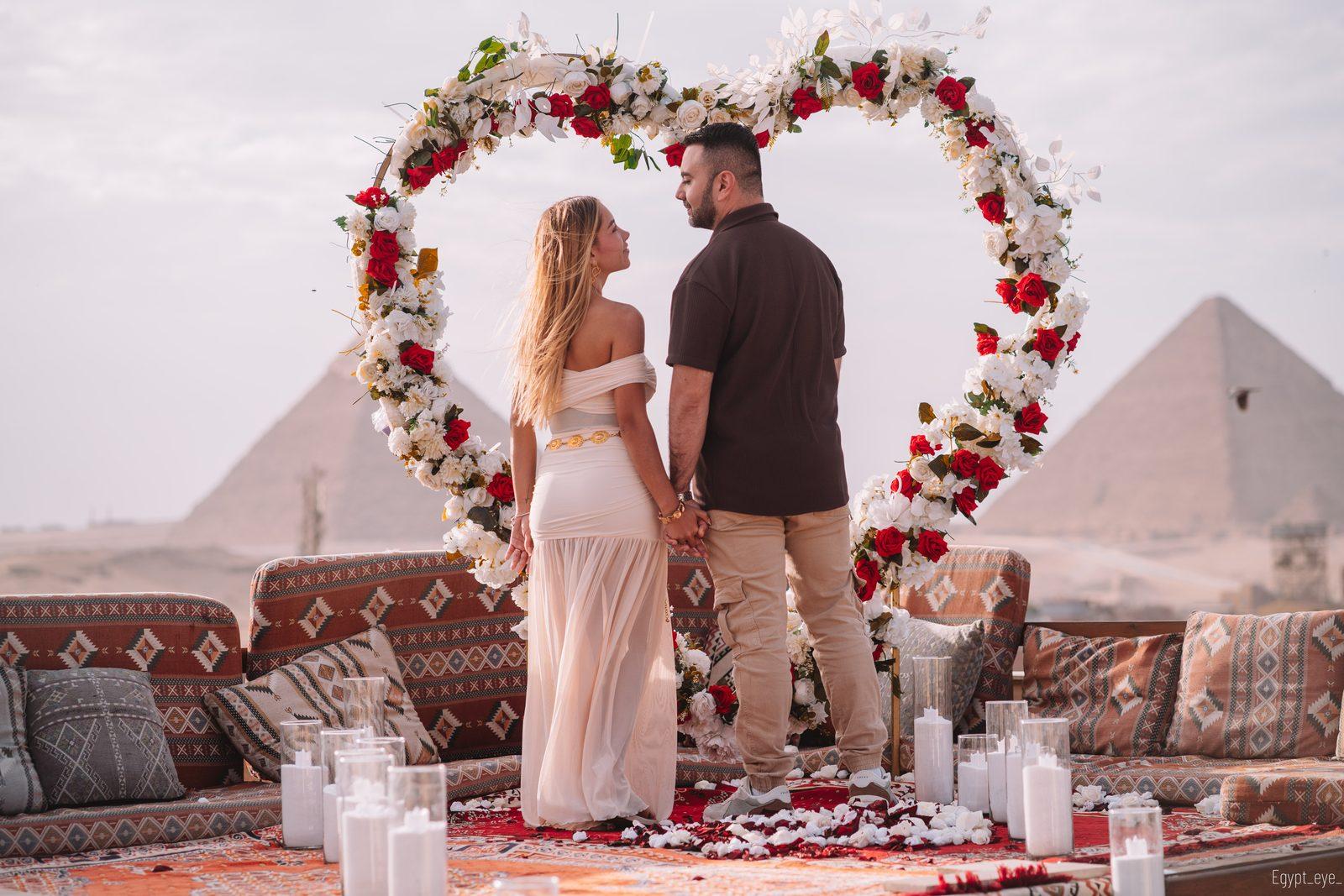
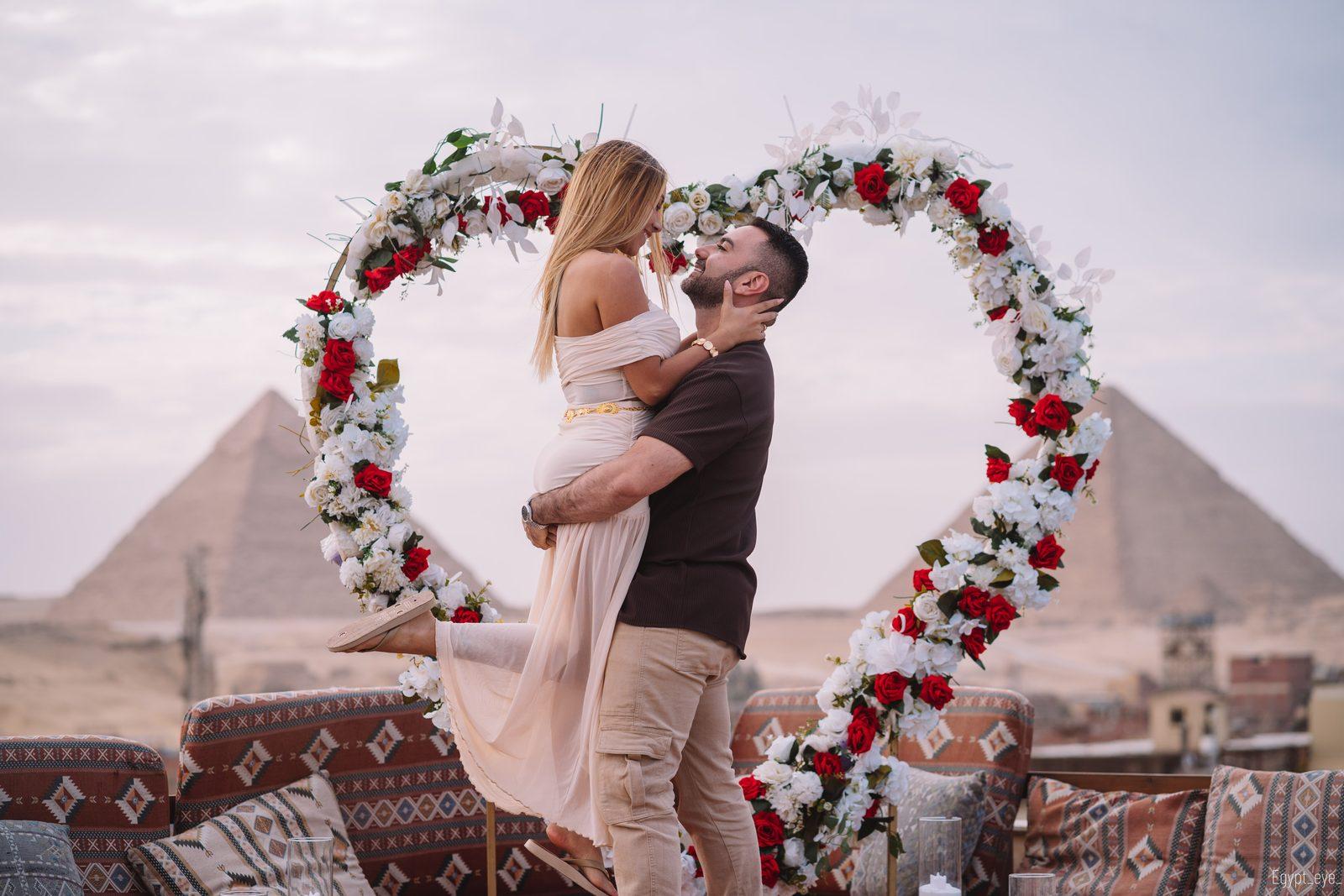
The first was built around a heart of red and white roses on a frame, tall enough to stand inside. A red patterned rug on the deck, rose petals scattered across it, and a ring of white pillar candles in glass holders around the whole thing. Shot in soft haze, so the three pyramids behind sat pale and the roses were the only strong colour in the frame.
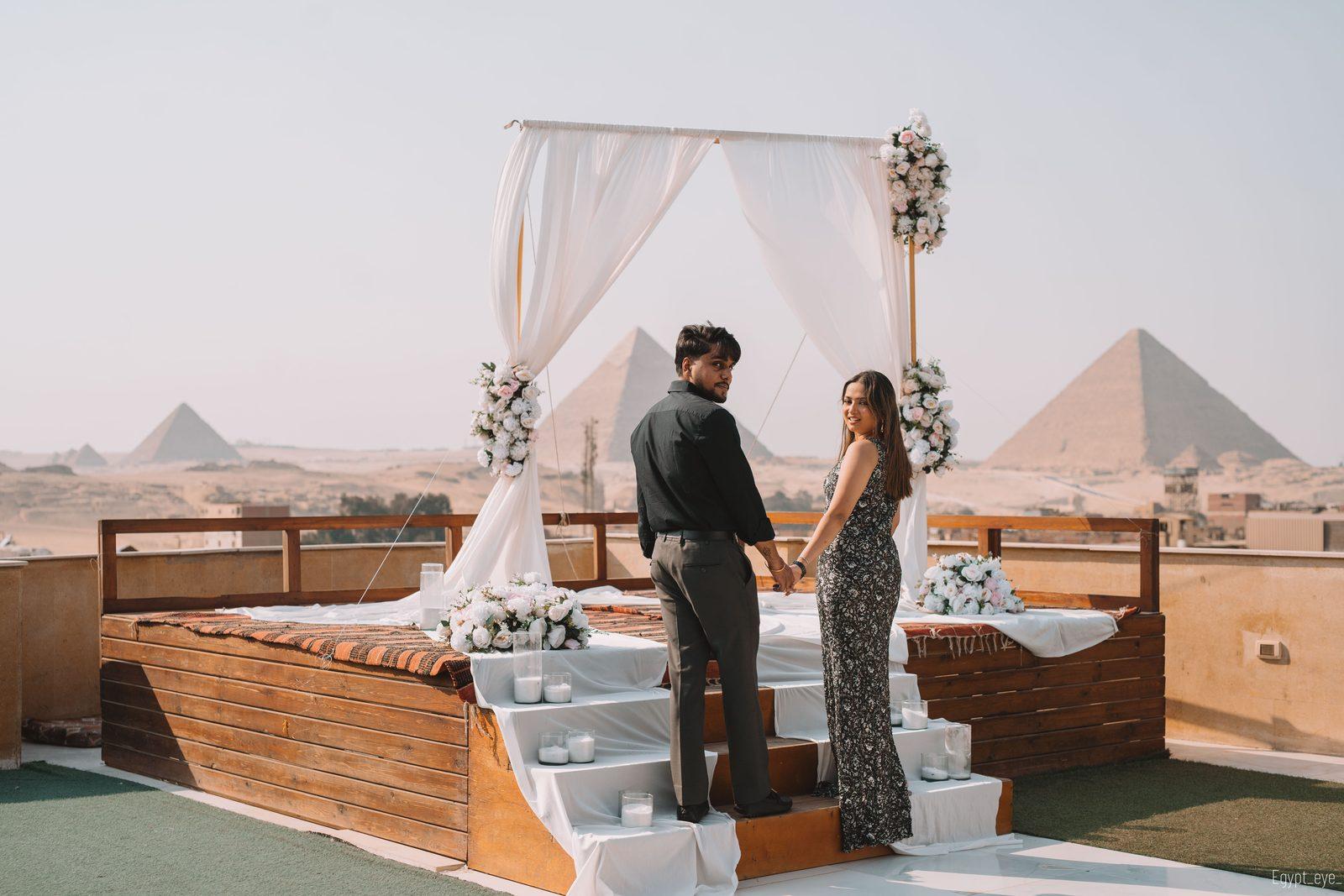
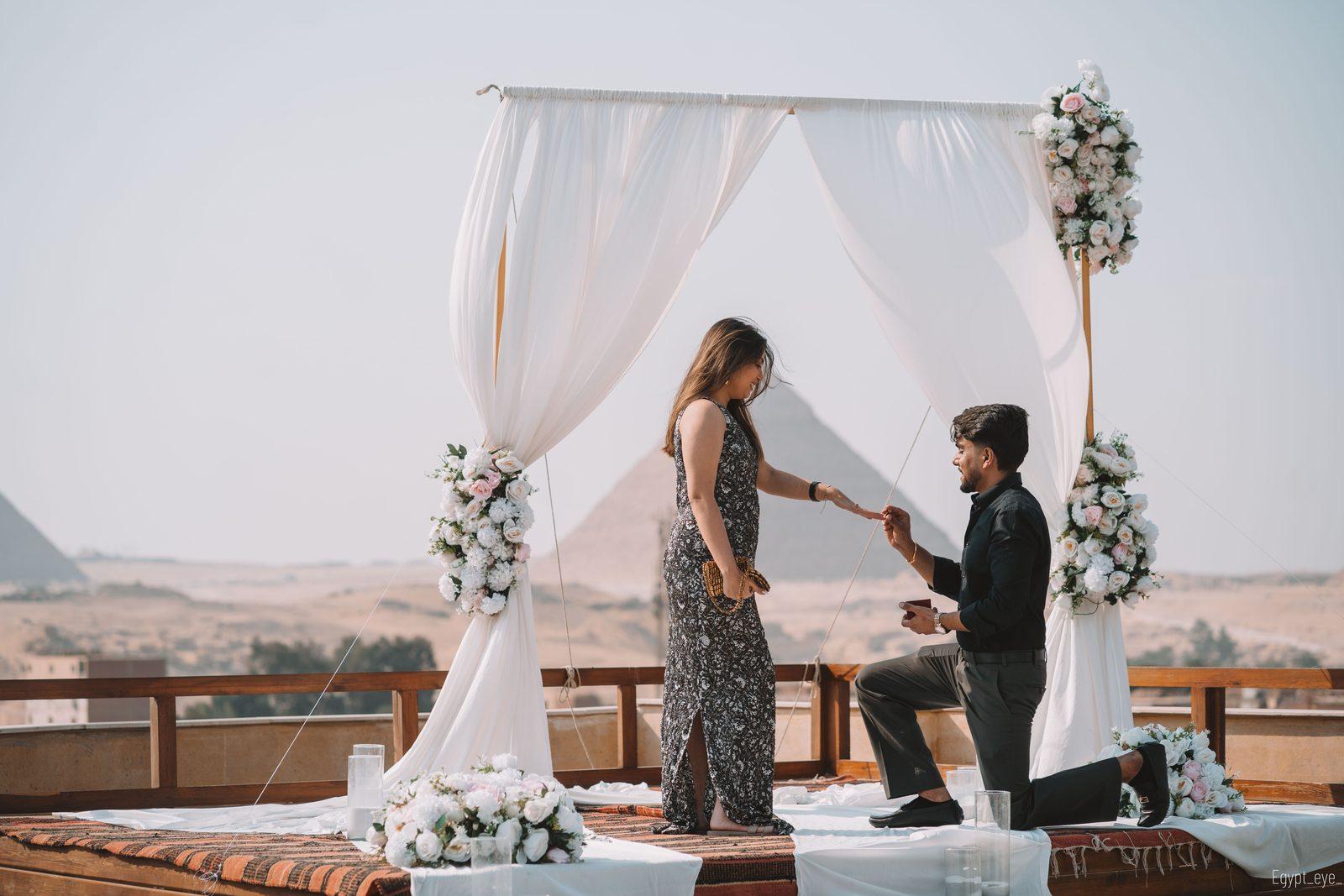
The second was quieter: two uprights carrying white drapes, small clusters of flowers at the top corners, the fabric running down onto the deck. Clear blue sky that evening. It is the one that photographs most like a wedding, and it is the one where the plateau does most of the work, because there is less in front of it.
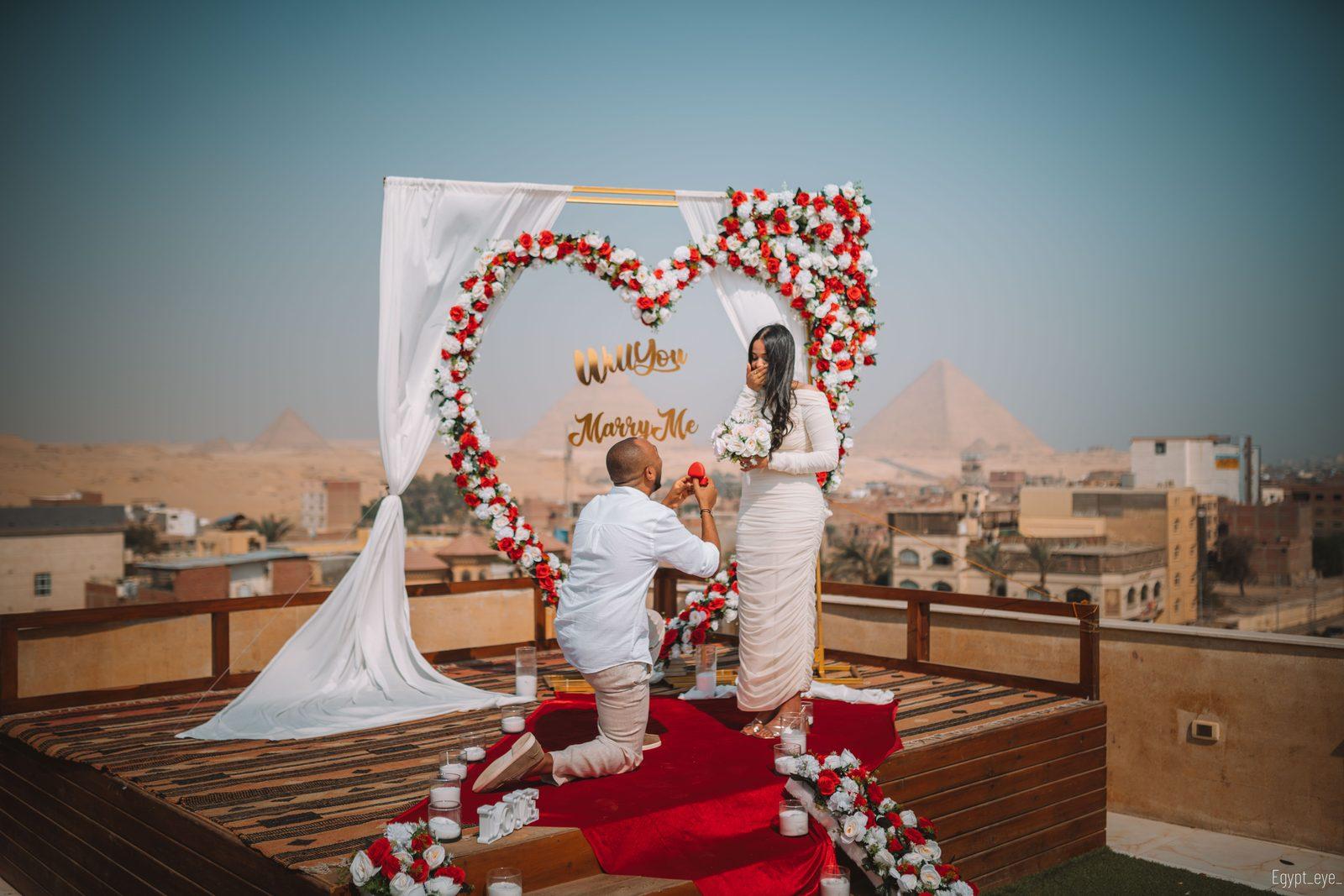
The third was the most elaborate: a heart of roses with a gold script sign inside it, white drape to one side, and a red carpet runner down the deck. Both of them in white. It is the loudest of the three and it is the one that reads instantly in a photograph on a phone.
Read those as what was built on three particular dates rather than as a menu. You choose the setup from the designs we are running when you enquire, and we send you what is actually available for your date, because what is in the collection changes.
The secrecy, which is the actual job
A proposal is planned the same way a surprise party is, except that one misdirected message ruins it rather than spoils it.
You pick the channel. Email, WhatsApp, whichever you name, and we use only that one. Nothing goes anywhere you have not told us to send it. The venue, the timing and the setup are arranged between us and the roof, so there is no reason for anything to reach your partner at all.
If the address you are writing from is one you share, say so in the first message. It is the single most common way this goes wrong and it is the easiest to avoid. There is more on that in photographing a proposal the other person does not know about.
Your song, through the speaker
There is a speaker on the roof. Send us the track you want playing as she arrives and we cue it.
It is a small thing that people are consistently glad they asked about, and it costs nothing to arrange. It also solves the problem of the walk out, which is otherwise the most awkward thirty seconds of the evening for the person doing the asking.
Where the photographer is
Not where she will be looking.
The frames people keep are almost always the ones taken before anybody said anything: the approach, the moment she sees the setup, the second before the question. Those only exist if somebody is already in position with the right lens on, which is why the photographer is placed before you walk out rather than following you onto the roof.
After the question, the session opens up. In all three of the sets above there are standing portraits, a dip, a kiss, and frames of the two of them with the plateau behind, all taken in the half hour that follows.
What you get, and when
More than a hundred edited photographs. They are delivered as a Google Drive gallery, and the gallery stays available for one year from the day it is shared. There is no rush to download and no deadline to miss.
How it is paid for
Twenty-five per cent secures your date. Until it is paid the roof is not held, and we will say that plainly rather than let you assume otherwise.
The remaining seventy-five per cent is paid on the day, after the event. Cash, PayPal, or a payment link we send you.
The quotation comes back to you in writing once the venue, the date and the time are agreed. Nothing is held before that.
Changing at the venue is arranged as part of holding your date. Tell us whether you are arriving dressed or want to change there and it is confirmed with the venue in writing along with everything else.
The order it happens in
Seven steps, and the roof is not yours until the fourth.
- Tell us the date, the hour and what she loves.
- Choose the setup from what we are running for your date.
- We confirm the roof and send the quotation in writing.
- A deposit secures it.
- The setup goes up on the roof ahead of you. The photographer takes position.
- You walk out. It is photographed as it happens.
- The gallery arrives, yours for a year.